EOC Türkiye is a web-based emergency operations platform built for Türkiye, giving disaster coordinators a single, unified view of every active agency, resource, and alert during fires, floods, earthquakes, and other large-scale emergencies. From real-time incident maps and agency dispatch to live resource tracking and inter-agency communication, it connects coordinators, responders, and resources when it matters most.

This case study covers the complete end-to-end design process, from user research and information architecture, to wireframes, design decisions, and high-fidelity screens. A fragmented, multi-agency coordination problem solved through a single, real-time operational platform.

🇹🇷  Coordinating faster, smarter emergency response — built for every Turkish city.

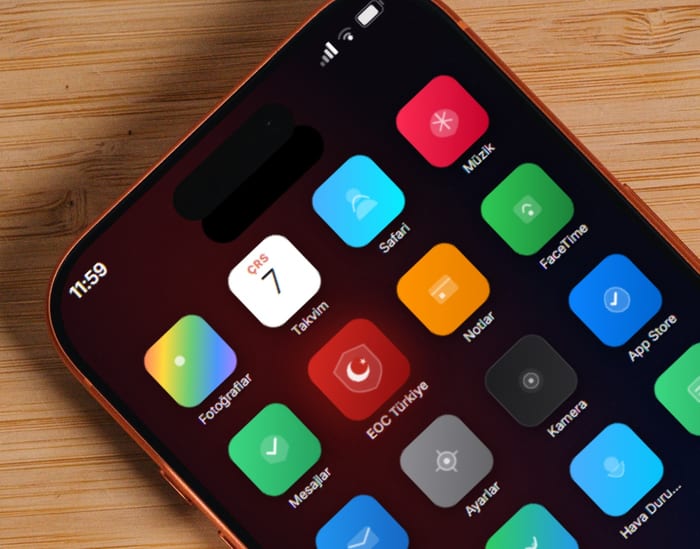
EOC Türkiye iPhone
iPhone 15 Pro
Ana ekranda EOC Türkiye uygulaması
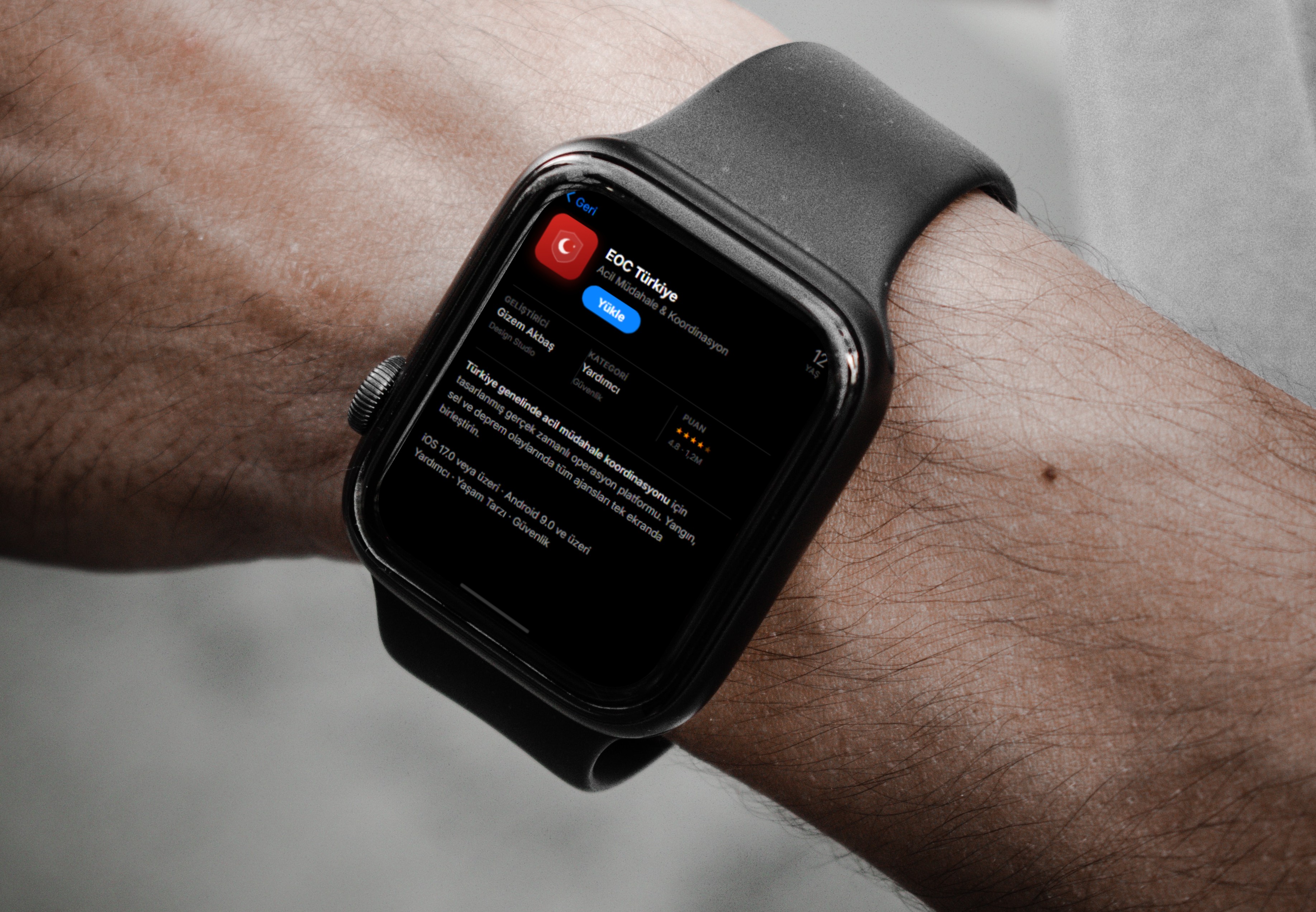
EOC Türkiye Apple Watch
Apple Watch Series 9
App Store'da EOC Türkiye
EOC Türkiye
01

Color Palette

The visual language of EOC Türkiye — built for high-stakes environments

Primary Orange #F97316 CTAs, highlights, active states
Background #0D0D10 Page & screen background
Card Surface #1A1A1E Cards, panels, containers
Critical Red #EF4444 Critical alerts only — semantic
02

The Problem

Why emergency coordination in Turkey needs a unified platform

8min To compile full situational picture
4+ Disconnected agency systems
Decisions made on incomplete data
0 Unified real-time views available

When a major emergency happens in Turkey (a building fire, a flood, an earthquake), fire, medical, police, and civil protection teams each respond with their own separate systems. No coordinator has a single screen showing the full picture.

To understand what is happening, a coordinator must call each agency one by one. On average this takes 8 minutes. In those 8 minutes, decisions are already being made on incomplete information.

Status requires phone calls

Each agency update requires a direct call. With 4+ agencies active, that is 8 minutes minimum per status cycle.

Alerts describe problems, not actions

Current systems notify coordinators of what went wrong, not what they should do about it.

Resources get duplicated or missed

Without a shared view, two teams dispatch to the same location while another zone gets no coverage.

03

Qualitative Research & Key Insights

Listening to Real Users and Their Needs

32 Participants Interviewed
84% Want real-time alerts
91%
Disaster Awareness

Have you personally experienced a major emergency like a fire, flood, or earthquake?

Key Insights:

91% of respondents had experienced at least one major emergency. Most felt current coordination tools were too slow and fragmented, validating the need for a unified operations platform.

72%
Information Sources During Emergencies

Where do you usually get status updates during an active emergency?

Key Insights:

72% relied on social media or direct radio contact, but 64% expressed frustration at delayed and unverified information. This indicates very high demand for a reliable, real-time data source.

66%
Top Priority When Incident Occurs

What is the first thing you do when a crisis event occurs in your area?

Key Insights:

66% said understanding the full scope of the incident is their top priority before dispatching resources. This confirmed the need for a command overview that shows everything at once, with no navigation required.

25%
Trust in Current Emergency Tools

Have you used any dedicated emergency coordination platform before?

Key Insights:

Only 25% had used a dedicated coordination tool. Most found existing systems complicated or lacking Turkey-specific data — directly validating the gap this platform aims to fill.

04

Quantitative Research & Key Insights

Validating Through Survey Data — 32 emergency professionals surveyed

Have you ever used a dedicated coordination platform before?

27%
Yes 27%
No 73%

Which feature is most critical during an active incident?

Live map
84%
Alert system
76%
Team dispatch
68%
Comms log
45%
Reports
22%

How do you usually communicate during emergencies?

Radio/phone
79%
Messaging app
44%
Digital platform
19%
Paper/verbal
31%

Would real-time alerts improve your response capability?

84%
Yes 84%
Maybe 11%
No 5%
05

Design Principles

The three rules every design decision was evaluated against

Status at a glance
A coordinator should never need to click, call, or navigate to understand the current state of an active incident. The most critical information must be visible the moment the screen opens.
🎯
Alerts prescribe action
Every alert tells the coordinator what to do, not just what happened. Decision support is built into each notification, reducing cognitive load at the moment it is highest.
🛡️
Works when systems fail
Emergencies damage infrastructure. The platform is designed to function on degraded connectivity and handles offline states with graceful fallbacks rather than error screens.
06

Final Screens

The design in action — three core views of the EOC platform

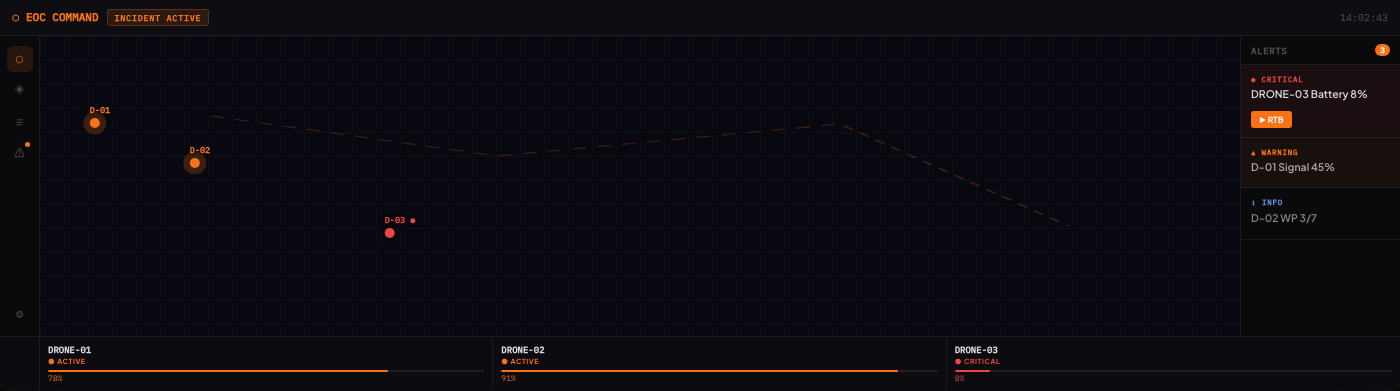
Screen 01 — Command Overview

Every agency, every alert, one screen

The primary view shows the tactical map, agency status, and active alerts simultaneously. A coordinator sees the full picture in the first three seconds. Critical incidents pulse to draw attention automatically, with no hunting required.

Incident Active
--:--:--
D-01
D-02
D-03 ●
Alerts3
● Critical
DRONE-03 Battery 8%
▶ RTB
▲ Warning
D-01 Signal 45%
ℹ Info
D-02 WP 3/7
DRONE-01
● Active
78%
DRONE-02
● Active
91%
DRONE-03
● Critical
8%
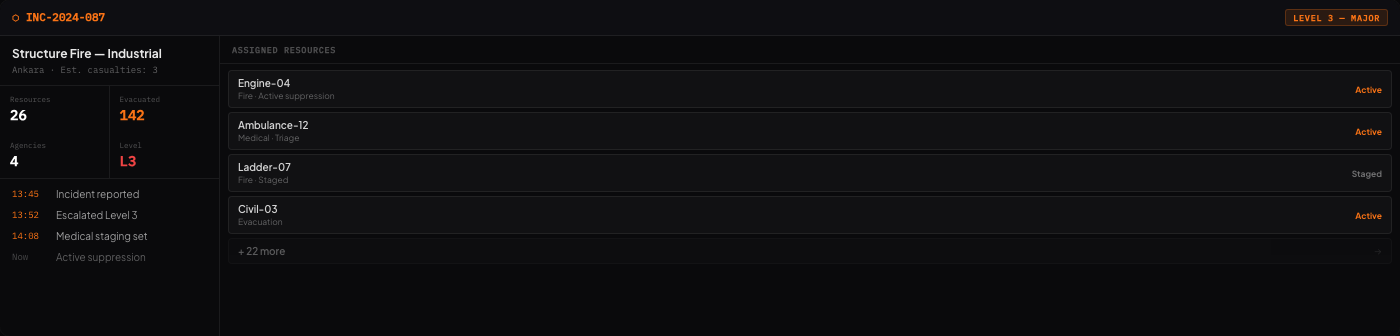
Screen 02 — Incident Detail

Full timeline and assigned resources in one view

Selecting any incident opens the structured detail view: timeline, escalation history, assigned teams, and remaining capacity. What used to require multiple phone calls now takes a single click.

Level 3 — Major
Structure Fire — Industrial
Ankara · Est. casualties: 3
Resources
26
Evacuated
142
Agencies
4
Level
L3
13:45Incident reported
13:52Escalated Level 3
14:08Medical staging set
NowActive suppression
Assigned resources
Engine-04
Fire · Active suppression
Active
Ambulance-12
Medical · Triage
Active
Ladder-07
Fire · Staged
Staged
Civil-03
Evacuation
Active
+ 22 more
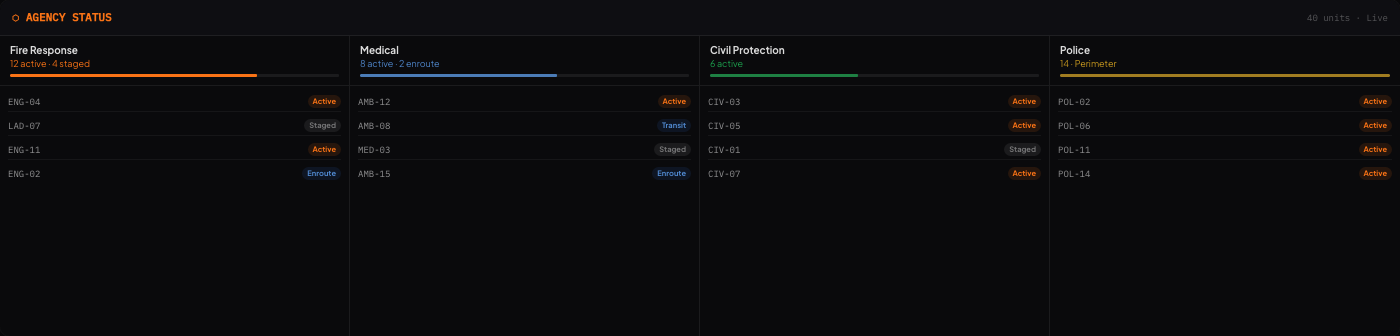
Screen 03 — Agency Status Board

Every team, every unit — replacing 6 phone calls

The agency status board gives a live view of every unit from every agency: deployment status, location, and availability. No coordinator has to pick up the phone to understand who is where.

40 units · Live
Fire Response
12 active · 4 staged
ENG-04Active
LAD-07Staged
ENG-11Active
ENG-02Enroute
Medical
8 active · 2 enroute
AMB-12Active
AMB-08Transit
MED-03Staged
AMB-15Enroute
Civil Protection
6 active
CIV-03Active
CIV-05Active
CIV-01Staged
CIV-07Active
Police
14 · Perimeter
POL-02Active
POL-06Active
POL-11Active
POL-14Active
07

What I Learned

Four things this project changed about how I think about design

01
Speed matters more than completeness
In an emergency, a coordinator cannot afford to search. The most important information must be visible the moment the screen opens. Every design decision came back to this.
02
Teams speak different languages
Fire, medical, and police describe the same situation differently. Finding a shared vocabulary that felt natural to all of them was one of the hardest design challenges.
03
Escalation beats notification
In high-stress environments, passive notifications get ignored. The system must actively surface developing situations so coordinators respond to escalations, not alerts they have to find.
04
Reliability is a design requirement
A platform that fails during an emergency is worse than no platform at all. Designing for degraded network conditions had to be part of the thinking from day one.
Next project
Asset Management Platform
Enterprise · Defense logistics · Product Design